
Milieu 2026 Study on Singapore's Silent Struggles

Singapore consistently tops global rankings on the world stage but behind the gleaming skyline and world-class infrastructure, a new survey by Milieu paints a more complicated picture than one would expect. The poll, conducted in June 2026 with 4,920 Singapore residents, focused on collecting perspectives about some of the city-state's most persistent social pressures. The findings cut across gender and age, revealing the struggles that some Singaporeans are facing.
A System That Works But Only If You Know How

When asked whether Singapore's social safety net catches people who fall behind, the most common answer was telling: 38% said it only helps "if you know how to navigate it." Another 17% felt the system "leaves most people to fend for themselves," while only 9% believed it "genuinely tries and mostly works."
Women were slightly more likely to feel left out where 40% chose the "if you know how to navigate" option, compared to 35% of men. Older respondents aged 45 and above were also more likely to say the system leaves people to fend for themselves closely followed respondents aged 35 and above at 19%, suggesting that those who have lived longer with the system's gaps feel its limitations most acutely.
The data points to a quiet but significant problem: a safety net that exists on paper may still fail people who lack the literacy, networks, or confidence to access it.
The Age Penalty Is Real, and Older Workers Are Feeling It
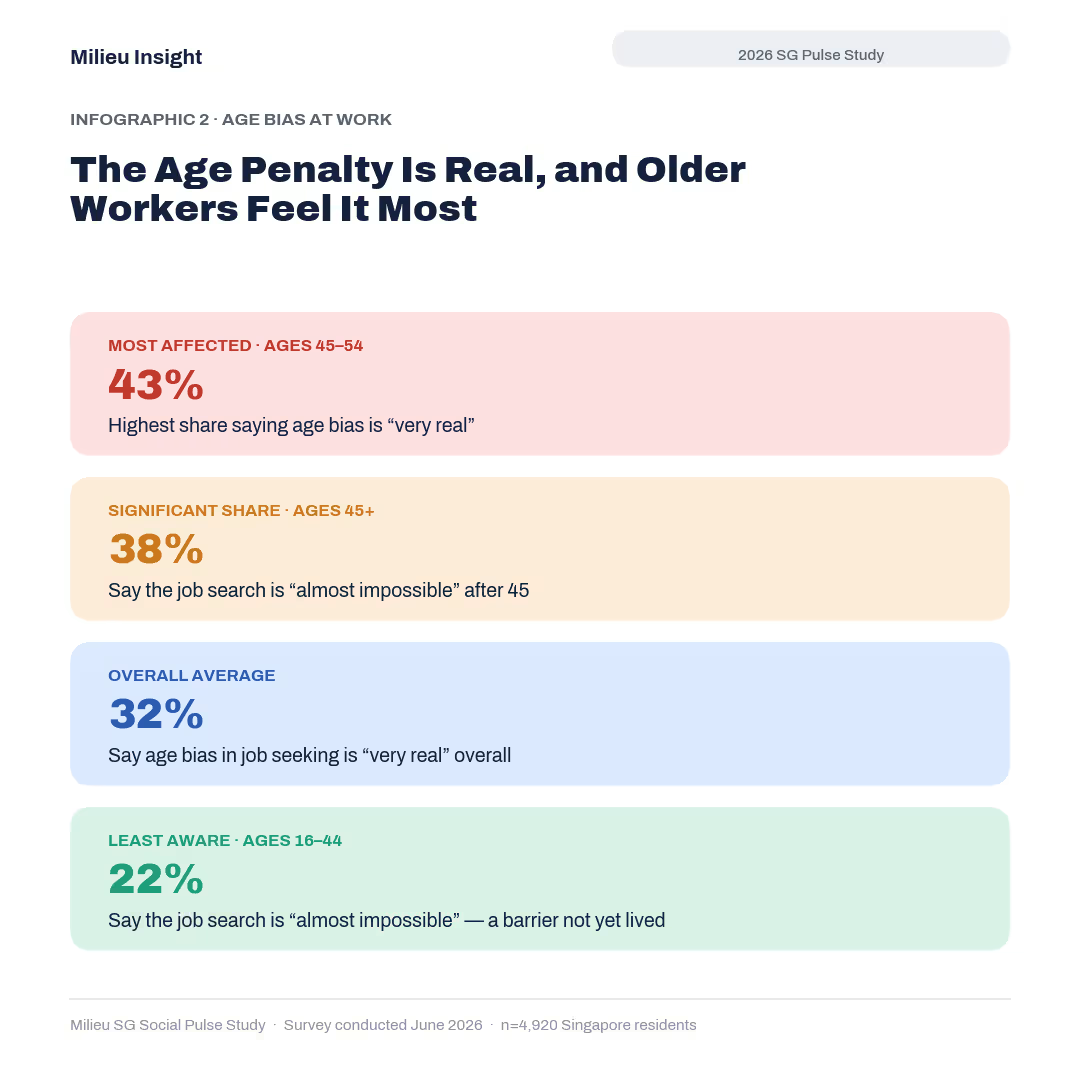
On the question of job seeking after 45, the survey found striking alignment across gender lines but a sharp divide by age. Overall, 32% said age bias is "very real", and 11% said it's "almost impossible" after a certain age. Only 10% believed experience is still genuinely valued.
The numbers grow more striking among older respondents themselves. Among those aged 45–54, 43% said age bias is very real, the highest of any age group. On the part of a job search being impossible after a certain age, collectively, 38% of respondents aged 45 and above agreed. Compared to just 22% in the 16-24, 25-24, and 35-44 age groups. In other words, younger Singaporeans are largely unaware of a barrier they haven't yet encountered.
This generational blind spot matters. Policies designed to support mature workers may struggle to gain public urgency when the majority of the electorate hasn't lived the experience yet.
Housing and Self Worth
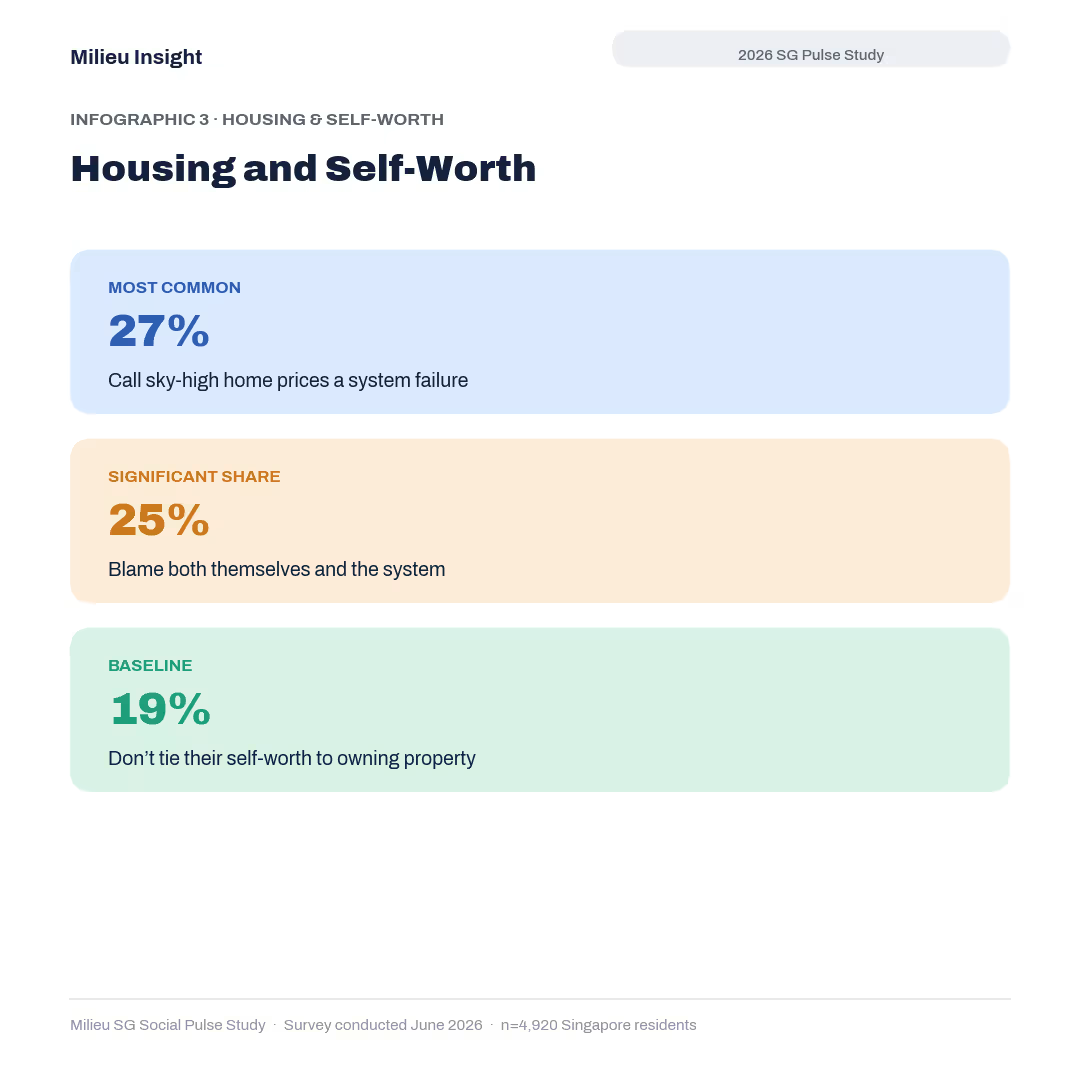
Home ownership in Singapore carries cultural weight that goes well beyond bricks and mortar. There are 3 main camps that Singaporeans belong in when asked how they feel about not owning a home by a certain age: Ones who feel it’s a system failure due to the skyrocket price (27%), blame themselves and the system (25%), and ones who don’t tie their worth to property (19%).
Younger respondents felt this most sharply. Among those aged 16–24, a combined 73% either blamed the system, themselves, or both compared to just 21% who owned a flat or felt indifferent. By contrast, among those 55 and above, 38% already owned a flat and understood the pressure only in retrospect. It could also be seen that the 25-34 age group takes the lead in not tying their self worth to having a property at 25%.
Men were more likely than women to frame it as a system failure (30% vs 25%), while women were slightly more likely to say they didn't tie their worth to property (23% vs 19%). Still, the data suggests housing remains one of Singapore's most emotionally loaded milestones.
The Loneliness That Doesn't Speak Its Name

Perhaps the most sobering finding is about connection. When asked how alone they feel navigating life's hardships, just 18% said they felt genuinely supported. Nearly half of the respondents (43%) said they manage, but it's heavy. Another 18% said people are simply too busy for each other, and 11% said they feel "completely alone" to the point where they don't think anyone would notice.
From the data, it could be seen that this issue cuts across generations and genders as the numbers are close to each other. What’s alarming is that the age groups that feels completely alone that people are overlooking their struggles are 45-54 (15%), 35-44 (13%), and 25-34 (10%).
The Gap Between the System and the Person
Taken together, these four data points sketch a city managing tremendous external success while its residents quietly absorb considerable internal strain. The safety net is there, but opaque. Careers are built, then threatened by an immutable force. Homes define worth in ways people resent but can't quite shake. And through it all, many Singaporeans carry the weight largely by themselves.

Author
Milieu Team
At Milieu, we’re a team of curious minds who love digging into data and uncovering what drives people. Together, we turn insights into stories—and stories into action. We also run on coffee, deadlines, and the occasional meme.
Latest Insights


