Live, Eat, Repeat: The Real Cost of the ‘Solo Economy’
When people picture solo living, it often looks appealing — a cosy apartment, meals made exactly how you like them, and the freedom to live life on your own terms. But our latest study tells a different story.
A survey of 3,000 adults across six Southeast Asian markets, Singapore, Malaysia, Thailand, Indonesia, the Philippines, and Vietnam, shows that while living alone offers independence, it also comes with financial and everyday challenges that often go unseen.
The Safety Net Many Don't Have
Let's start with finances.
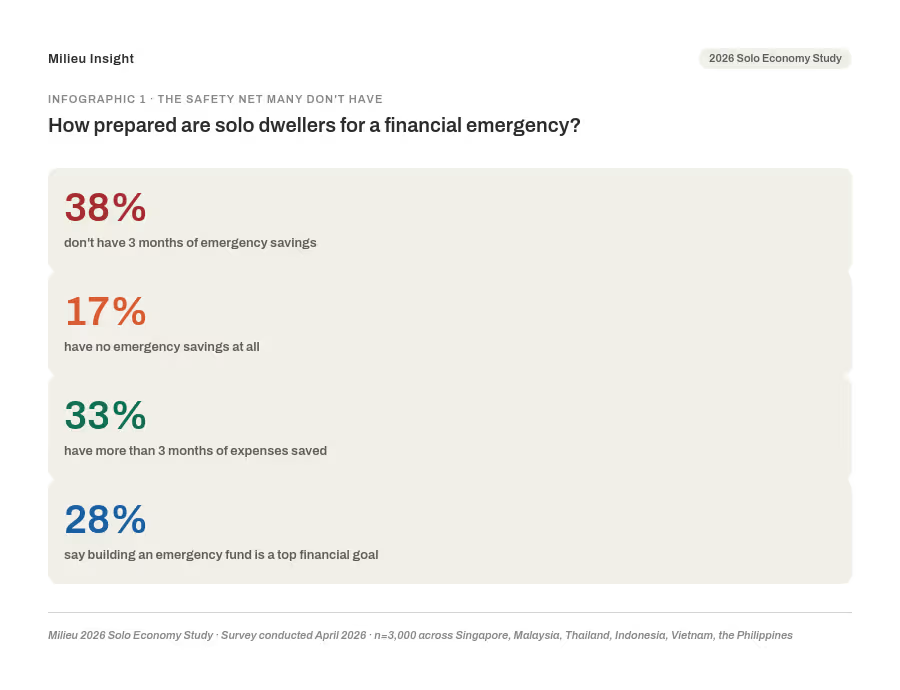
When asked whether they have enough savings to cover at least three months of living expenses in an emergency, 38% said no. Of these, 21% said they have very little saved and worry about it, while 17% said they have no emergency savings at all. Only 33% said they have more than three months' worth of expenses set aside.
For people living alone, this can be especially challenging. There is no partner to share household costs with and no built-in financial backup when unexpected expenses arise. A medical bill, home repair, or job loss can have a much bigger impact when you're managing everything on your own.
The pressure is showing in other ways too. One in five respondents (20%) said their biggest financial challenge is saving money, while 28% said building an emergency fund is one of their main financial goals. Many are trying to create a safety net, but getting there isn't always easy.
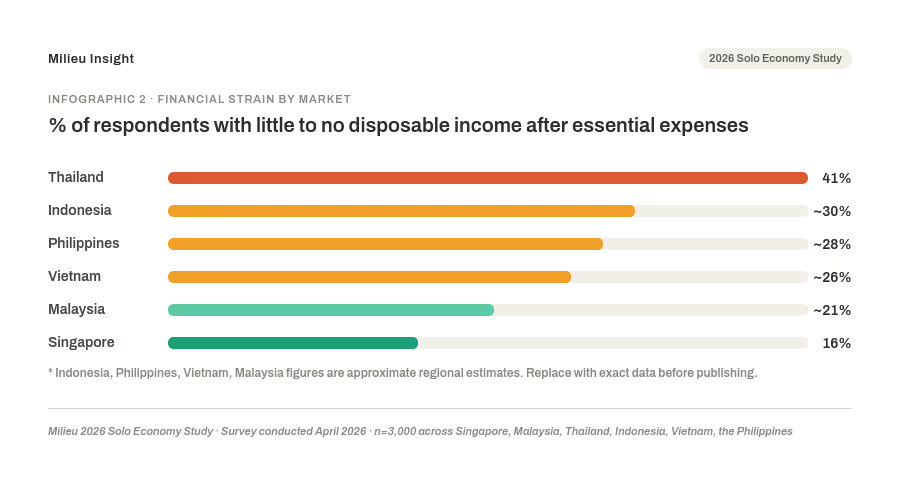
Among the six markets surveyed, Thailand appears to be feeling the greatest financial strain. More than four in ten Thai respondents (41%) said they have little to no disposable income left after covering essential expenses. In comparison, only 16% of Singapore respondents said the same.
It's a reminder that solo living can look very different depending on where you live.
What Eating Alone Looks Like Across Southeast Asia
Food habits offer an interesting glimpse into how people are adapting to life on their own. When asked how they typically manage weekday meals, clear differences emerged across the region. Here we spotlight three distinct countries:
- Singapore: The Hawker Culture Advantage
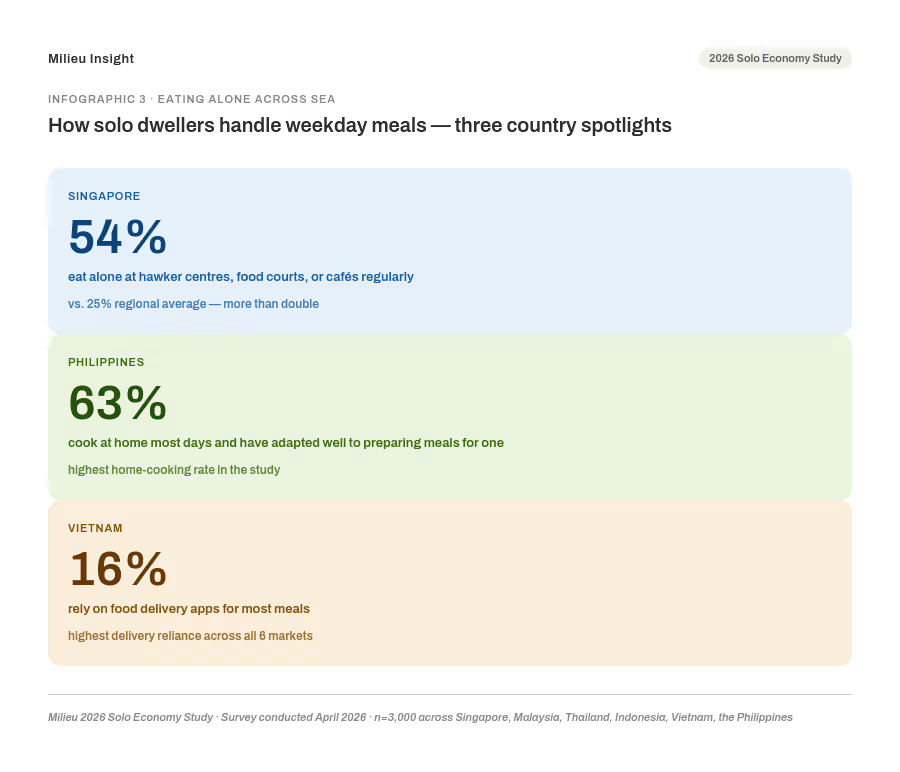
More than half of Singapore respondents (54%) said they regularly eat alone at hawker centres, food courts, or cafés, more than double the regional average of 25%.This is hardly surprising. Affordable communal dining is deeply woven into Singapore's culture, making solo dining feel completely normal. Eating alone at a hawker centre isn't a special occasion, it's simply part of everyday life.
- The Philippines: Home-Cooked Comfort
The Philippines recorded the highest rate of home cooking in the study, with 63% saying they cook at home most days and have adapted well to preparing meals for one. This likely reflects a combination of practicality, budget-consciousness, and a strong culture of home-cooked meals.
- Vietnam: Convenience on Demand
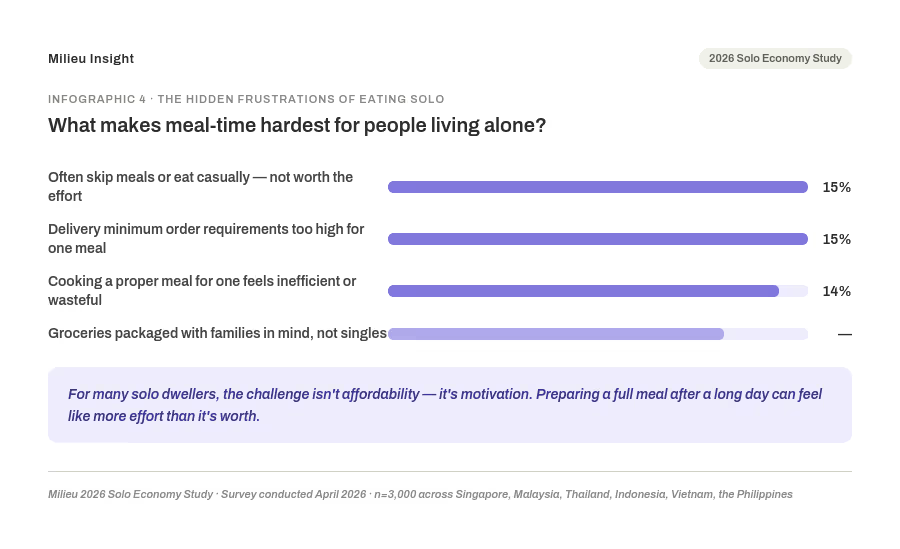
Vietnam stood out for its use of food delivery services, with 16% saying they rely on food delivery apps, the highest among the markets surveyed. Vietnamese respondents were also among the most likely to prepare meals in advance, suggesting many are balancing busy schedules with convenience-driven food choices. But perhaps one of the most interesting findings is that 15% of respondents said they often skip meals or eat very casually because cooking for one doesn't feel worth the effort.
For many solo dwellers, the challenge isn't necessarily affordability — it's motivation. Preparing a full meal for yourself after a long day can sometimes feel like more effort than it's worth.
The Hidden Challenges of Living Alone
When the financial and food-related findings are viewed together, a clearer picture begins to emerge. Many people living alone are managing tight budgets while also dealing with the practical realities of eating solo.
Groceries are often packaged with families in mind. Food delivery minimum orders can feel excessive for a single meal. Dining out alone may still feel uncomfortable for some, and cooking for one every day can become repetitive.
In fact, 14% of respondents said their biggest frustration is that cooking a proper meal for one feels inefficient or wasteful, while 15% pointed to delivery minimum order requirements as a challenge.
Our findings don't suggest that living alone is a negative experience. Rather, they highlight the trade-offs that come with independence. While solo living offers freedom and flexibility, it also requires careful budgeting, planning, and adaptation to everyday challenges.
For a growing number of Southeast Asians, flying solo means learning how to make it all work, one meal, one bill, and one month at a time.
Based on findings from the Milieu 2026 Solo Economy Study. Survey conducted in April 2026 across Singapore, Malaysia, Thailand, Indonesia, Vietnam, and the Philippines. Total sample size: 3,000 respondents.

Author
Milieu Team
At Milieu, we’re a team of curious minds who love digging into data and uncovering what drives people. Together, we turn insights into stories—and stories into action. We also run on coffee, deadlines, and the occasional meme.
Latest Insights